Taught By A Tanker

My father, SSgt. James Harold Mayer (Ret.), was better known later in life affectionately first as “Pop” and later as “Grandpa Jim.” He was a member of what my friend Tom Brokaw referred to as “The Greatest Generation.” Grandpa Jim was a World War II veteran, who like millions of other Americans enlisted to do their duty, each in their own way, as a part of the “war effort.” He often told me, “Son, among the many miracles of the US Army is how they were able to take men, train them, figure out what they were good at, and then train them further and assign them duties to maximize their abilities to contribute to victory over the Axis forces.”
Pop was a classic example of that. Prior to December 7, 1941, he was fully trained as a mechanic and his father was the Chief Mechanic for the City of Fairfield, Illinois, responsible for maintaining the entire fleet of vehicles for that Southern Illinois city. (To this day, when you enter the city limits, you are greeted by a sign reading “Welcome to Fairfield-The Home of Friendly People.”)
He entered the service as an expert mechanic, trained to do everything to keep vehicles with 4-stroke internal combustion engines moving, effective, and “in-service.” After Basic Training, the Army wisely decided that Jim was best suited to be a tank maintenance supervisor and assigned him to the 16th Ordnance Division at Aberdeen Proving Ground, the nation’s oldest testing and training facility for tanks and armored vehicles, where he quickly became the lead instructor, responsible for training the men who would attached to all armored units in the ETO (European Theater of Operations.) Pop was ultimately responsible for training hundreds of men who would be attached to the entire D Day Normandy liberation, as well as what became General George S. Patton’s Third Army. An awesome responsibility… But if you asked him about the war, he would just smile and say, “Hell, I was just a glorified school teacher.” Some teacher…some glory!
This tanker taught me many, many wise lessons, just as he taught those hundreds of tank maintenance officers. Here’s a couple of them:
Keep it Simple
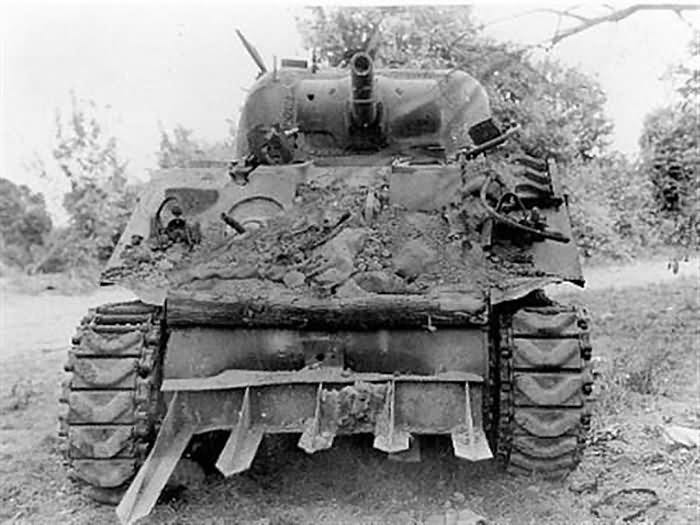
The M4A1 Sherman tank which was the mainstay of US Army tanks in the ETO but Pop always said (and later showed me, both via diagrams and crawling inside tanks) that the M4 was “designed by geniuses,” because it was stunningly simple in its construction, operation…and maintenance. It was known for simplicity of design, ease of repair,
reliability, adaptability, and the need for extremely limited logistical and technical support. Built by a wartime consortium of Ford, General Motors, Chrysler, and Lima Locomotive Works, it had a car-like transmission and steering system.
Simplicity and reliability paid off. Pop told me that a typical Sherman tank weighed 34 tons and required 1 hour of maintenance in order to deliver 100 hours in battle. (Contrast that with the “feared” German Tiger tanks which weighed 58 tons, frequently broke down, and required 100 hours of maintenance for every 1 hour it was in battle. To move long distances, Tigers had to have their tracks removed and refitted with narrow “transport tracks” to even fit on a rail car. Shermans literally drove straight on rail cars.)
Keeping things simple is still an essential strategy for leaders at all levels, as we continue to seek the distinctions between “data, knowledge, and wisdom.” There is wisdom in simplicity…
“Use your noggin and find a way!”

In teaching tank maintenance officers, Pop and his counterparts stressed the need for them to adapt and use their “noggins” when they faced obstacles. Almst inconceivably, despite extensive intelligence about Normandy and the conditions they would face, no one seems to have realized the considerable difficulties that the Norman hedgerows would create for advancing troops-especially the Shermans, whose “noses” would rise up dramatically when going over the embankments, exposing their unarmored “bellies” to the German panzerfaust anti-tank weapons. But the tank maintenance crews “used their noggins” and created “cutters,” welding them on the front of the tanks, enabling them to tear through the hedgerows instead of going over them, turning them into “Bocage Busters.” “Good old American ingenuity” Pop called it but it was taught before they ever left Aberdeen for ETO! (They also welded spare tank treads on the front of their tanks, thereby “up-armoring them” against the Tiger 75mm guns…) The cutters were designed by Seargeant Curtis Cullen In Normandy…and Pop had trained Seargent Cullen!
Both as a linebacker in college and especially as an emergency medicine/sports medicine doc, keeping it simple and “using my noggin” to adapt have been invaluable lessons…which I have passed on to my students.
Thanks, Grandpa Jim-you exemplify what Henry Adams noted that, “A teacher affects eternity-he can never tell where his influence ends.”
Your wisdom lives on and affects my students every day… And I keep a metal replica of a M4 Sherman tank on my desk to remind me of that every day.
So keep it simple, folks…and use your noggin!
Thanks for reading,
Doc
Click here to order my book on Amazon.
Click here to inquire about a speaking or consulting engagement with me.
Follow me on Instagram
Thanks for joining the conversation and connecting with me.
Good reading, good leading, and let’s learn and have fun together!
Doctor Thom Mayer has been a leader in times of crisis for over 25 years, navigating some of the most significant challenges imaginable.
He is the Medical Director for the NFL Players Association, as well as an emergency physician-sports medicine leader of international renown.
He served as the Command Physician at the Pentagon Rescue/Recovery Operation on 9/11, Incident Commander for the inhalational anthrax outbreak in Washington, DC that same year, and led a Team Rubicon Mobile Emergency Team in Ukraine following the outbreak of war.
He is among the most widely respected leaders in times of crisis and is a highly sought after speaker and consultant across many businesses and industries.